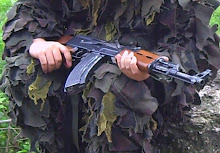
With their ability to sell war risk insurance that’s akin to selling ice cubes to Eskimos, are insurance companies virtually engaged in war profiteering in our post 9/11 world?
By: Ringo Bones
From the aftermath of the September 11, 2001 terror attacks to the ever increasing scourge of maritime piracy off the coast of Somalia, war risk insurance had managed to turn itself almost into a household name – albeit for all the wrong reasons. Such insurance policies do provide a service to corporate entities that allows them to hedge their risks in the brave new word after the 9/11 terror attacks. Despite of its “apparent” usefulness in our post 9/11 world, isn’t war risk insurance just another name for war profiteering?
A war profiteer is often defined as someone who makes what is considered an unreasonable profit on the sale of essential goods during times of war and / or conflict. War risk insurance may not – or will ever be – classified under “essential goods” by ordinary folks like us, yet ever since the 9/11 terror attacks – and especially the rise of piracy targeting maritime commerce of the coast of Somalia – premium rates of war risk insurance has been on the rise, and making insurance companies who flog them unreasonable profit from our perspective. If things go on as they are, the time would come that premium rates of even the most basic of war risk insurance policies will no longer be deemed economically viable by corporate entities that need them the most.
So, are insurance companies engaging themselves in war profiteering when it comes to providing war risk insurance in a post 9/11 world? It is best to be pragmatic when it comes to such matters, but corporate entities finding ways to hedge their risks against the next 9/11 or just coping with the inherent risk involved doing maritime commerce in the pirate infested waters of the Somali coast are prone to financial exploitation by insurance companies. Given that the risk dynamic of terror attacks and piracy seems to defy the somewhat relatively "static" mathematical models used in most risk assessment tools, a re-evaluation of war risk insurance premiums would not be that much unreasonable - unless of course insurance companies are truly engaged in war profiteering in our brave new post 9/11 world.
Tuesday, August 10, 2010

Monday, July 12, 2010
Should There Be A Nuclear War Risk Insurance?
With the growing concern and diplomatic tension of rogue states with nuclear capability, does the establishment of a nuclear war risk insurance now a commercially viable enterprise?
By: Ringo Bones
The Cold War may be a distant memory for most of us but the threat of Nuclear Armageddon has and is always been still at a moment’s notice – especially now with the tensions between North and South Korea are on an all time high due to the sinking of a South Korean warship under suspicious circumstances that resulted in the death of 46 South Korean sailors. Not to mention Iran’s clandestine nuclear weapons program that has raised serious concerns on every UN Security Council sessions. Add to that Taiwan’s desire to be fully independent from Beijing and loose nukes falling to the hands of extremist groups making it still a safe bet that the possibility of a nuclear war is still not zero. It really seems that the Doomsday Clock at the headquarters of the Bulletin of the Atomic Scientists is stuck at two minutes to midnight. Given that the threat of nuclear annihilation today is probably no more or no less of a possibility as it was at the height of the Cold War, does the establishment of nuclear war risk insurance still economically viable?
Ordinary war risk insurance came into being when the need for an affordable marine insurance arose during the threat of submarine warfare back in World War II. The US Congress then passed the War Risk Insurance Act, which provided insurance protection for cargo and crew ships supplying for the Allies. Since private underwriters at that time did not dare insure civilian ships engaged in commerce except at premiums far above those which could be paid. The War Shipping Administration – much to the relief of the private underwriters – offered premiums far below commercial rates which only the US government has the revenue to afford to take such risks at that time. Given that the legal precedents for establishing war risk insurance are already in place, is there one needed for the establishment for nuclear war risk insurance?
At least for mail in the United States that is, back in the early 1950s, the US Postal Service developed an emergency planning manual, outlining procedures that would still allow mail delivery following a nuclear attack. These plans were regularly updated and a complete revision was undertaken back in1981. In addition, Executive Order 11490, dated October 28, 1969, as amended by Executive Order 11921, dated June 11, 1976, assigned the post office responsibility for emergency mail service and other duties associated with civil defense programs of the time. Detailed instructions were also stockpiled, telling people how to fill up forms and account for any missing persons – and for postal officials, how to test cards for radioactivity before processing them.
Among the actions outlined in the 1981 revisions state the authorization of local postmasters to burn stamps to prevent them from falling into enemy hands. Restrict mail sent after a nuclear attack to first class letters and to place an immediate ban on the issuance of money orders for payment in the country that attacked the United States. At a 1982 congressional hearing, a post office official acknowledged that a massive nuclear attack would – at the very least – make implementing the agency’s plans very difficult. But he then defended them by saying that the agency must be prepared.
Given that today’s US Congress are currently embroiled in immigration and healthcare than in revising Executive Order 11490 and Executive Order 11921 in order for a better tailored emergency response against nuclear attacks from rogue states and extremist groups. Or better yet serve as a legal precedent for equitably structured nuclear war risk insurance. The establishment of a nuclear war risk insurance – as it seems – has become as dubious a concept as personal meteorite strike insurance - a catastrophic risk whose possibility of happening is exceedingly small from a statistical standpoint, reminiscent of the concept behind the Partitioned Multi-objective Risk Method developed by Yacov Haimes when it comes to the risk assessment rationale behind nuclear war risk insurance. Maybe insurance company brokers better consult their underwriters’ box and loss adjusters whether nuclear war risk insurance is a sound business model before their competitors beat them to an increasingly lucrative niche insurance market. It could be a very Dr. Strangeloveian way to make a profit.
By: Ringo Bones
The Cold War may be a distant memory for most of us but the threat of Nuclear Armageddon has and is always been still at a moment’s notice – especially now with the tensions between North and South Korea are on an all time high due to the sinking of a South Korean warship under suspicious circumstances that resulted in the death of 46 South Korean sailors. Not to mention Iran’s clandestine nuclear weapons program that has raised serious concerns on every UN Security Council sessions. Add to that Taiwan’s desire to be fully independent from Beijing and loose nukes falling to the hands of extremist groups making it still a safe bet that the possibility of a nuclear war is still not zero. It really seems that the Doomsday Clock at the headquarters of the Bulletin of the Atomic Scientists is stuck at two minutes to midnight. Given that the threat of nuclear annihilation today is probably no more or no less of a possibility as it was at the height of the Cold War, does the establishment of nuclear war risk insurance still economically viable?
Ordinary war risk insurance came into being when the need for an affordable marine insurance arose during the threat of submarine warfare back in World War II. The US Congress then passed the War Risk Insurance Act, which provided insurance protection for cargo and crew ships supplying for the Allies. Since private underwriters at that time did not dare insure civilian ships engaged in commerce except at premiums far above those which could be paid. The War Shipping Administration – much to the relief of the private underwriters – offered premiums far below commercial rates which only the US government has the revenue to afford to take such risks at that time. Given that the legal precedents for establishing war risk insurance are already in place, is there one needed for the establishment for nuclear war risk insurance?
At least for mail in the United States that is, back in the early 1950s, the US Postal Service developed an emergency planning manual, outlining procedures that would still allow mail delivery following a nuclear attack. These plans were regularly updated and a complete revision was undertaken back in1981. In addition, Executive Order 11490, dated October 28, 1969, as amended by Executive Order 11921, dated June 11, 1976, assigned the post office responsibility for emergency mail service and other duties associated with civil defense programs of the time. Detailed instructions were also stockpiled, telling people how to fill up forms and account for any missing persons – and for postal officials, how to test cards for radioactivity before processing them.
Among the actions outlined in the 1981 revisions state the authorization of local postmasters to burn stamps to prevent them from falling into enemy hands. Restrict mail sent after a nuclear attack to first class letters and to place an immediate ban on the issuance of money orders for payment in the country that attacked the United States. At a 1982 congressional hearing, a post office official acknowledged that a massive nuclear attack would – at the very least – make implementing the agency’s plans very difficult. But he then defended them by saying that the agency must be prepared.
Given that today’s US Congress are currently embroiled in immigration and healthcare than in revising Executive Order 11490 and Executive Order 11921 in order for a better tailored emergency response against nuclear attacks from rogue states and extremist groups. Or better yet serve as a legal precedent for equitably structured nuclear war risk insurance. The establishment of a nuclear war risk insurance – as it seems – has become as dubious a concept as personal meteorite strike insurance - a catastrophic risk whose possibility of happening is exceedingly small from a statistical standpoint, reminiscent of the concept behind the Partitioned Multi-objective Risk Method developed by Yacov Haimes when it comes to the risk assessment rationale behind nuclear war risk insurance. Maybe insurance company brokers better consult their underwriters’ box and loss adjusters whether nuclear war risk insurance is a sound business model before their competitors beat them to an increasingly lucrative niche insurance market. It could be a very Dr. Strangeloveian way to make a profit.
Wednesday, June 30, 2010
Musical Instrument Insurance, Anyone?
With the mishandled guitar debacle between country musician Dave Carroll and United Airlines a year or so ago becoming headline news in certain circles, is the musical instrument insurance biz still economically viable?
By: Ringo Bones
Back in July 2009, the conflict between country musician Dave Carroll and United Airlines over mishandled guitars might have gained Carroll a new fanbase, but other touring musicians might be wondering whether it is high time for them to get musical instrument insurance. After all, not all touring musicians – especially after the age of Napsterization – are fortunate enough to have their own touring planes or be able to buy one in the foreseeable future.
Compared to homeowner’s insurance, musical instrument insurance are probably about as common as hen’s teeth. But that still doesn’t mean that this “niche market insurance” has been immune from the admen’s charms. “Real World Coverage” has been the recent buzzword being branded about in the musical instrument insurance market and your typical touring musician still managed to eke out a commercially viable living in today’s world were on-line music piracy is the norm rather than the exception. Thus guaranteeing the demand for such insurance given Dave Carroll’s recent high-profile guitar debacle with United Airlines.
When a touring musician who’s still at the mercy of big airline companies consults their nearest insurance agent about musical instrument insurance, they are usually told that the current musical instrument policy they are about to avail provides about the same coverage as their competitors. Not to mention the oft cliché pitch that theirs provide “real world coverage”.
Ten years ago, musical instrument insurance coverage was pretty basic when compared to today’s typical coverage policies. Which now includes: Thirty days free coverage for borrowed instruments – which is a must in today’s free online download generation were a touring musician can seldom afford quality musical instruments commensurate with his or her skill level. The right to keep undamaged parts of any instrument suffering a loss – a must for us who still harbor that emotion called sentiment. Right to repurchase – permitting you, the owner, to repurchase recovered instruments at the price paid for the claim regardless of the increase in market value of the instrument during that time. Loss of market value coverage that pays you the difference in market value for instruments that had been damaged and / or repaired. No exclusion for instruments in a motor vehicle – for those still touring in a run-of-the-mill tour bus. Inflation Guard policy that provides insurance beyond policy limits. And most of all free transferable coverage for replacement instruments – i.e. “loaners” – while yours is still being repaired for a claim.
Lets just hope that the provider’s real world coverage policies work in the real world of your typical touring musician and should provide every touring musician adequate financial compensation. Whenever he or she encounters a problem like that of Dave Carroll when he boarded United Airlines with his musical instruments back in July 2009. The days of the multi-millionaire Rock-Star might be long gone, but it still makes good fiscal sense for touring musicians to be protected from the real world perils of their occupation.
By: Ringo Bones
Back in July 2009, the conflict between country musician Dave Carroll and United Airlines over mishandled guitars might have gained Carroll a new fanbase, but other touring musicians might be wondering whether it is high time for them to get musical instrument insurance. After all, not all touring musicians – especially after the age of Napsterization – are fortunate enough to have their own touring planes or be able to buy one in the foreseeable future.
Compared to homeowner’s insurance, musical instrument insurance are probably about as common as hen’s teeth. But that still doesn’t mean that this “niche market insurance” has been immune from the admen’s charms. “Real World Coverage” has been the recent buzzword being branded about in the musical instrument insurance market and your typical touring musician still managed to eke out a commercially viable living in today’s world were on-line music piracy is the norm rather than the exception. Thus guaranteeing the demand for such insurance given Dave Carroll’s recent high-profile guitar debacle with United Airlines.
When a touring musician who’s still at the mercy of big airline companies consults their nearest insurance agent about musical instrument insurance, they are usually told that the current musical instrument policy they are about to avail provides about the same coverage as their competitors. Not to mention the oft cliché pitch that theirs provide “real world coverage”.
Ten years ago, musical instrument insurance coverage was pretty basic when compared to today’s typical coverage policies. Which now includes: Thirty days free coverage for borrowed instruments – which is a must in today’s free online download generation were a touring musician can seldom afford quality musical instruments commensurate with his or her skill level. The right to keep undamaged parts of any instrument suffering a loss – a must for us who still harbor that emotion called sentiment. Right to repurchase – permitting you, the owner, to repurchase recovered instruments at the price paid for the claim regardless of the increase in market value of the instrument during that time. Loss of market value coverage that pays you the difference in market value for instruments that had been damaged and / or repaired. No exclusion for instruments in a motor vehicle – for those still touring in a run-of-the-mill tour bus. Inflation Guard policy that provides insurance beyond policy limits. And most of all free transferable coverage for replacement instruments – i.e. “loaners” – while yours is still being repaired for a claim.
Lets just hope that the provider’s real world coverage policies work in the real world of your typical touring musician and should provide every touring musician adequate financial compensation. Whenever he or she encounters a problem like that of Dave Carroll when he boarded United Airlines with his musical instruments back in July 2009. The days of the multi-millionaire Rock-Star might be long gone, but it still makes good fiscal sense for touring musicians to be protected from the real world perils of their occupation.
Wednesday, May 19, 2010
Of Therapeutic Vacations and Travel Insurance
Even though the therapeutic vacation side of the travel industry remains very much an unexplored niche market, will travel insurance providers’ policies on preexisting conditions hinder its economic viability?
By: Ringo Bones
Before being called as such, the concept behind therapeutic vacations and / or therapeutic holidays probably predates the invention of the wheel. When prehistoric men and women set off in pilgrimages – religious or otherwise – for the travel destinations supposed feel-good factor. These days, there are a myriad or more travel destinations that seems to offer therapeutic effects – whether via religious miracles or well-established hagiographic pedigree – just waiting to be tapped by the post-credit crunch travel industry. Sadly, the concept of therapeutic vacations may well remain just a dream due to an overwhelming majority of travel insurance providers’ preoccupation with their policyholders’ preexisting conditions.
The issue of insurance providers somewhat unhealthy fetish over their policyholders’ preexisting conditions became a cause célèbre during the height of President Obama’s campaign for healthcare reform in America. Cancer survivors being recommended by their doctors for therapeutic vacations or therapeutic holidays at present usually can’t afford it due to the fact that their insurance providers provide them with travel insurance policies as expensive as or even more expensive than their planned therapeutic vacations.
Knowledgeable individuals involved in such quandary are now questioning whether insurance underwriters and risk assessors under the tenure of big insurance companies truly understand the true nature of risks faced by cancer survivors. Blatantly so when the hike in travel insurance premiums doesn’t seem to mathematically coincide with the perceived risks using the latest risk assessment analytical tools at our disposal. Looks like your planned trip to visit the Dalai Lama in Dharmsala, India just to be grateful after your ordeal of a decade-long battle with leukemia might be a very expensive proposition from a travel insurance perspective.
By: Ringo Bones
Before being called as such, the concept behind therapeutic vacations and / or therapeutic holidays probably predates the invention of the wheel. When prehistoric men and women set off in pilgrimages – religious or otherwise – for the travel destinations supposed feel-good factor. These days, there are a myriad or more travel destinations that seems to offer therapeutic effects – whether via religious miracles or well-established hagiographic pedigree – just waiting to be tapped by the post-credit crunch travel industry. Sadly, the concept of therapeutic vacations may well remain just a dream due to an overwhelming majority of travel insurance providers’ preoccupation with their policyholders’ preexisting conditions.
The issue of insurance providers somewhat unhealthy fetish over their policyholders’ preexisting conditions became a cause célèbre during the height of President Obama’s campaign for healthcare reform in America. Cancer survivors being recommended by their doctors for therapeutic vacations or therapeutic holidays at present usually can’t afford it due to the fact that their insurance providers provide them with travel insurance policies as expensive as or even more expensive than their planned therapeutic vacations.
Knowledgeable individuals involved in such quandary are now questioning whether insurance underwriters and risk assessors under the tenure of big insurance companies truly understand the true nature of risks faced by cancer survivors. Blatantly so when the hike in travel insurance premiums doesn’t seem to mathematically coincide with the perceived risks using the latest risk assessment analytical tools at our disposal. Looks like your planned trip to visit the Dalai Lama in Dharmsala, India just to be grateful after your ordeal of a decade-long battle with leukemia might be a very expensive proposition from a travel insurance perspective.
Monday, April 19, 2010
Iceland’s Volcanic Eruption: A Nightmare for Air Travel Insurance Providers?
Given that the ongoing Icelandic volcanic eruption had disrupted air travel over one of the world’s most lucrative airspace, could this “inconvenience” eventually bankrupt travel insurance providers?
By: Ringo Bones
Fortunately, no loss of life has yet been reported on the ongoing Icelandic volcanic eruption of the Eyjafjallajokull Glacier Volcano, but it seems to me that the insurance pay-outs from such “inconvenience” has a high probability of rivaling that of the insurance pay-outs of the 1906 San Francisco Earthquake. According to IATA, the resulting ash cloud that lead to the suspension of commercial air travel over the affected European airspace had been costing major airline companies on average 200-million US dollars a day.
British Airways and other major European air carriers have had their share prices go down due to the resulting air travel chaos. Millions of dollars have already been lost when perishables destined for European markets that had to be air freighted never got to their intended customers, like flowers from Kenya. Not only did the Icelandic volcanic eruption did a number on European commerce, it also disrupted the travel plans of European VIPs – even US President Barack Obama – indefinitely postponing their plans to attend the State Funeral of the late Polish president Lech Kaczynski.
Volcanic ash is especially damaging to modern jet engines because the ash is primarily composed of very fine glass particles that can gunk up as it melts within the turbines in the high temperature interior of jet engines. The ongoing eruption of the Icelandic volcano also produces a greater quantity of ash because it is situated in a glacier. Unfortunately, the last time the volcano erupted was in 1820s and Victorian era gentleman-scientists probably overlooked it due to its remote location. Thus making predictions on when it erupts that much difficult.
From an insurance company’s perspective, the air travel chaos caused by the volcanic eruption to one of the world’s most lucrative airspace can be a travel insurance provider’s and airfreight insurance provider’s liability nightmare. Especially those who are obligated to pay damages that includes care and loss of services, not to mention those that still pay for any mental anguish incurred by their policyholders. Given the austere fiscal environment of our post global credit crunch world, British Airways had even stated that they don’t have enough insurance money to refund stranded passengers.
Will the over 17,000 flights cancelled across European airspace – not to mention incoming Transatlantic air traffic from America - eventually drive airline companies with insufficient financial backing to the brink of bankruptcy? Only time will tell since Iceland’s geologist have forecasted that the volcanic eruptions will probably continue until the 21st of April. And if it does continue until mid July, tourists around the world planning their European summer vacation will certainly have their travel itineraries rescheduled. Ruining Europe’s still-recovering tourism industry and becoming every insurance company’s worst nightmare.
By: Ringo Bones
Fortunately, no loss of life has yet been reported on the ongoing Icelandic volcanic eruption of the Eyjafjallajokull Glacier Volcano, but it seems to me that the insurance pay-outs from such “inconvenience” has a high probability of rivaling that of the insurance pay-outs of the 1906 San Francisco Earthquake. According to IATA, the resulting ash cloud that lead to the suspension of commercial air travel over the affected European airspace had been costing major airline companies on average 200-million US dollars a day.
British Airways and other major European air carriers have had their share prices go down due to the resulting air travel chaos. Millions of dollars have already been lost when perishables destined for European markets that had to be air freighted never got to their intended customers, like flowers from Kenya. Not only did the Icelandic volcanic eruption did a number on European commerce, it also disrupted the travel plans of European VIPs – even US President Barack Obama – indefinitely postponing their plans to attend the State Funeral of the late Polish president Lech Kaczynski.
Volcanic ash is especially damaging to modern jet engines because the ash is primarily composed of very fine glass particles that can gunk up as it melts within the turbines in the high temperature interior of jet engines. The ongoing eruption of the Icelandic volcano also produces a greater quantity of ash because it is situated in a glacier. Unfortunately, the last time the volcano erupted was in 1820s and Victorian era gentleman-scientists probably overlooked it due to its remote location. Thus making predictions on when it erupts that much difficult.
From an insurance company’s perspective, the air travel chaos caused by the volcanic eruption to one of the world’s most lucrative airspace can be a travel insurance provider’s and airfreight insurance provider’s liability nightmare. Especially those who are obligated to pay damages that includes care and loss of services, not to mention those that still pay for any mental anguish incurred by their policyholders. Given the austere fiscal environment of our post global credit crunch world, British Airways had even stated that they don’t have enough insurance money to refund stranded passengers.
Will the over 17,000 flights cancelled across European airspace – not to mention incoming Transatlantic air traffic from America - eventually drive airline companies with insufficient financial backing to the brink of bankruptcy? Only time will tell since Iceland’s geologist have forecasted that the volcanic eruptions will probably continue until the 21st of April. And if it does continue until mid July, tourists around the world planning their European summer vacation will certainly have their travel itineraries rescheduled. Ruining Europe’s still-recovering tourism industry and becoming every insurance company’s worst nightmare.
Thursday, February 11, 2010
The Fault-Tree Analysis: Still A Relevant Risk Assessment Tool?
First formulated in order to assess the probability of failure of fairly complex systems over thirty years ago is the fault-tree analysis still applicable in current assessment of today’s complex systems?
By: Ringo Bones
Even though there’s a growing perception of the general public’s declining trust in risk management since the September 11, 2001 terror attacks, it is quite ironic to ponder that risk assessment has further matured since that tragic event. As long as they had been around or had been tenured by insurance companies, risk analysts often start by dividing hazards into two parts – namely exposure and effect. Even though they’ve had it down to a science, insurance companies cannot yet predict whether any single driver will be killed or injured in an accident, even though they can estimate the annual number of crash-related deaths and injuries in the United States with considerable precision. With the salient point in the development of risk assessment during the past three decades had been in large part the search of ways to determine the extent of risks that have very little precedent. Like the link between cellular phone / mobile phone use and brain tumor risks and a more objective assessment of catastrophic global warming risks.
Risk assessments of complex systems are more often than not defined by the enumeration of failure modes. A common technique called failure mode and effect analysis where risk analysts try to identify all the events that might lead to a system breakdown. Usually when all the failure modes have been enumerated, the fault-tree analysis has been routinely used since the last 35 years or so, as an aid to estimate the likelihood of failure of any given mode.
First utilized on a large scale by Norman C. Rasmussen of the Massachusetts Institute of Technology back in 1975 to study nuclear reactor safety. Although specific details of his risk assessment estimates were disputed under peer review, fault-tree analyses are now routinely used in the nuclear industry. As a rule, a fault tree graphically represents how the subsystems of a larger system depend on one another and how a failure of one part affects key operations. Once a particular fault tree of a particular system is constructed, one need to only estimate the probability that once individual elements do fail, the same probability governs the set of circumstances that lead to the entire system’s failure to function.
Due to the method’s good track record of formulating more effective risk mitigation while reducing costs in its implementation, the plane-maker Boeing had been for sometime now been applying fault-tree analysis in the design of large aircraft. Company engineers have identified and remedied a number of potential problems in passenger aircraft design. Such as vulnerabilities caused by routing multiple control lines through the same area, which can be a recipe for disaster during a bird-strike incident. Even though it is already too late for their chemical plant in Bhopal, India, Union Carbide had also employed the technique in designing processes for chemical plants. Particularly in deciding where to situate their plants and in evaluating the risks of transporting particular chemicals. But as a risk assessment tool, is fault-tree analysis still relevant today?
Maybe Barbara Ehrenreich was right for lambasting the overly-optimistic and cavalier attitude of Wall Street when it comes to risk assessment because the fat-cats had never discussed using fault-tree analysis to examine the vulnerability of the global financial system’s propensity to failure. As a fairly complex system, fault-tree analysis could have been used to examine the global financial system’s failure modes that could have averted the widespread collapse of banks and other financial institutions deemed to big to fail back in 2008.
In our eternal struggle for the search for an effective carbon neutral energy source, fault-tree analysis could be used to assess the risks of constructing more nuclear fission power plants in comparison to the global warming risks posed by coal-fired power plants. As the only feasible carbon neutral electricity generating power plant that is here right now, a renewed risk assessment of nuclear fission technology deserves reevaluation until we can find something better that truly works.
By: Ringo Bones
Even though there’s a growing perception of the general public’s declining trust in risk management since the September 11, 2001 terror attacks, it is quite ironic to ponder that risk assessment has further matured since that tragic event. As long as they had been around or had been tenured by insurance companies, risk analysts often start by dividing hazards into two parts – namely exposure and effect. Even though they’ve had it down to a science, insurance companies cannot yet predict whether any single driver will be killed or injured in an accident, even though they can estimate the annual number of crash-related deaths and injuries in the United States with considerable precision. With the salient point in the development of risk assessment during the past three decades had been in large part the search of ways to determine the extent of risks that have very little precedent. Like the link between cellular phone / mobile phone use and brain tumor risks and a more objective assessment of catastrophic global warming risks.
Risk assessments of complex systems are more often than not defined by the enumeration of failure modes. A common technique called failure mode and effect analysis where risk analysts try to identify all the events that might lead to a system breakdown. Usually when all the failure modes have been enumerated, the fault-tree analysis has been routinely used since the last 35 years or so, as an aid to estimate the likelihood of failure of any given mode.
First utilized on a large scale by Norman C. Rasmussen of the Massachusetts Institute of Technology back in 1975 to study nuclear reactor safety. Although specific details of his risk assessment estimates were disputed under peer review, fault-tree analyses are now routinely used in the nuclear industry. As a rule, a fault tree graphically represents how the subsystems of a larger system depend on one another and how a failure of one part affects key operations. Once a particular fault tree of a particular system is constructed, one need to only estimate the probability that once individual elements do fail, the same probability governs the set of circumstances that lead to the entire system’s failure to function.
Due to the method’s good track record of formulating more effective risk mitigation while reducing costs in its implementation, the plane-maker Boeing had been for sometime now been applying fault-tree analysis in the design of large aircraft. Company engineers have identified and remedied a number of potential problems in passenger aircraft design. Such as vulnerabilities caused by routing multiple control lines through the same area, which can be a recipe for disaster during a bird-strike incident. Even though it is already too late for their chemical plant in Bhopal, India, Union Carbide had also employed the technique in designing processes for chemical plants. Particularly in deciding where to situate their plants and in evaluating the risks of transporting particular chemicals. But as a risk assessment tool, is fault-tree analysis still relevant today?
Maybe Barbara Ehrenreich was right for lambasting the overly-optimistic and cavalier attitude of Wall Street when it comes to risk assessment because the fat-cats had never discussed using fault-tree analysis to examine the vulnerability of the global financial system’s propensity to failure. As a fairly complex system, fault-tree analysis could have been used to examine the global financial system’s failure modes that could have averted the widespread collapse of banks and other financial institutions deemed to big to fail back in 2008.
In our eternal struggle for the search for an effective carbon neutral energy source, fault-tree analysis could be used to assess the risks of constructing more nuclear fission power plants in comparison to the global warming risks posed by coal-fired power plants. As the only feasible carbon neutral electricity generating power plant that is here right now, a renewed risk assessment of nuclear fission technology deserves reevaluation until we can find something better that truly works.
Monday, December 21, 2009
Reputational Risk Insurance for Celebrity Product Endorsement
Given the recent “transgressions” of Tiger Woods had made his sponsors backing away en masse, would a reputational risk insurance of celebrities endorsing their sponsors’ products be a good idea?
By: Ringo Bones
The recent high-profile “transgressions” of G-Rated family-friendly golf megastar Tiger Woods not only sent the tabloid press community into their trademarked coverage frenzy, but also made Tiger Woods’ sponsors – whose products he’s been so busy endorsing for more than ten years – backing away en masse. As one of the golfing world’s top cash cow who managed to earn over a billion dollars during his career that might yet still to reach its prime. Is Tiger Woods not only unnecessarily endangering his own golfing career, but also the long-term economic viability of the sport of golf as well?
High-profile celebrity product endorsers whose reputation leaves much to be desired has been de rigueur in the Rock and Pop music world for a long time now. Remember W. Axl Rose, the mercurial frontman of Hair Metal era Rock outfit Guns N’ Roses? Despite of his reputation, Axl’s “unique” singing style made every live concert sound engineer notice the frequency response band limitations of Shure SM57 Beta microphones that made them better “plan” on how to use these idiosyncratic microphones on stage in live Rock concerts. Thus making such dynamic microphones a mainstay in Shure’s product lineup despite of a non-flat frequency response. Even someone like Paris Hilton, who’s name is unlikely to be ever used with the phrase “moral turpitude” on the same sentence manages to endorse top of the line beauty products from the world’s top cosmetics manufacturers.
Although in the multi million dollar endorsement contracts world of professional sports, the established “overlords” are not so forgiving when it comes to “transgressions” and “improprieties”. A few years ago, a promising basketball superstar named Kobe Bryant who’s sporting career has yet to reach its prime also has his sponsors moving away en masse after his own “transgressions” became supermarket tabloid fodder. And now, the problem plaguing Tiger Woods not only threaten the famed golfer’s bottom line, but also the bottom line of the golfing world whom his golfing career has seemed to prop-up since 1996. Can the establishment of a form of reputational risk insurance be of help on the fiscal aspect of this debacle?
Reputational risk insurance could be modeled after occupational health insurance or permanent health insurance where a reputational risk policy provides the policyholder with a source of income akin to “disability benefits” when the policyholder can no longer make money from the high-profile celebrity who endorses their products. Instead of just “abruptly” terminating their fiscal obligation with the celebrity endorsee in a fiscally unjust manner.
Reputational risk insurance might also be used to provide benefits when the high-profile celebrity is no longer able to perform substantially all of the contractual acts that he or she signed when endorsing the product(s) of his or her main sponsor. This could be either due to marital “transgressions” or other “impropriety” of reputational nature. Maybe it is high time that the product endorsement world should find ways to insure themselves against vagaries such as these in order to maintain fiscal stability.
By: Ringo Bones
The recent high-profile “transgressions” of G-Rated family-friendly golf megastar Tiger Woods not only sent the tabloid press community into their trademarked coverage frenzy, but also made Tiger Woods’ sponsors – whose products he’s been so busy endorsing for more than ten years – backing away en masse. As one of the golfing world’s top cash cow who managed to earn over a billion dollars during his career that might yet still to reach its prime. Is Tiger Woods not only unnecessarily endangering his own golfing career, but also the long-term economic viability of the sport of golf as well?
High-profile celebrity product endorsers whose reputation leaves much to be desired has been de rigueur in the Rock and Pop music world for a long time now. Remember W. Axl Rose, the mercurial frontman of Hair Metal era Rock outfit Guns N’ Roses? Despite of his reputation, Axl’s “unique” singing style made every live concert sound engineer notice the frequency response band limitations of Shure SM57 Beta microphones that made them better “plan” on how to use these idiosyncratic microphones on stage in live Rock concerts. Thus making such dynamic microphones a mainstay in Shure’s product lineup despite of a non-flat frequency response. Even someone like Paris Hilton, who’s name is unlikely to be ever used with the phrase “moral turpitude” on the same sentence manages to endorse top of the line beauty products from the world’s top cosmetics manufacturers.
Although in the multi million dollar endorsement contracts world of professional sports, the established “overlords” are not so forgiving when it comes to “transgressions” and “improprieties”. A few years ago, a promising basketball superstar named Kobe Bryant who’s sporting career has yet to reach its prime also has his sponsors moving away en masse after his own “transgressions” became supermarket tabloid fodder. And now, the problem plaguing Tiger Woods not only threaten the famed golfer’s bottom line, but also the bottom line of the golfing world whom his golfing career has seemed to prop-up since 1996. Can the establishment of a form of reputational risk insurance be of help on the fiscal aspect of this debacle?
Reputational risk insurance could be modeled after occupational health insurance or permanent health insurance where a reputational risk policy provides the policyholder with a source of income akin to “disability benefits” when the policyholder can no longer make money from the high-profile celebrity who endorses their products. Instead of just “abruptly” terminating their fiscal obligation with the celebrity endorsee in a fiscally unjust manner.
Reputational risk insurance might also be used to provide benefits when the high-profile celebrity is no longer able to perform substantially all of the contractual acts that he or she signed when endorsing the product(s) of his or her main sponsor. This could be either due to marital “transgressions” or other “impropriety” of reputational nature. Maybe it is high time that the product endorsement world should find ways to insure themselves against vagaries such as these in order to maintain fiscal stability.
Subscribe to:
Posts (Atom)